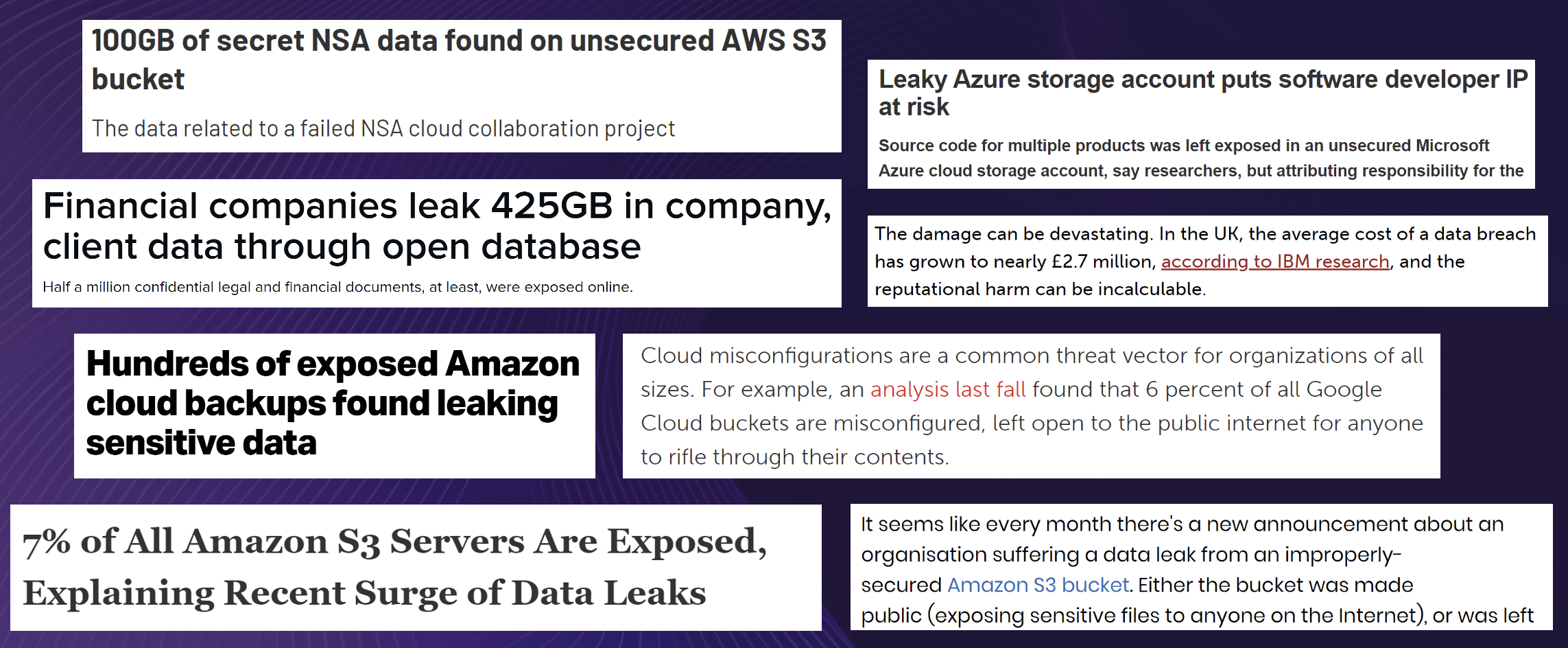

Cloud security incidents affected 65% of organizations in 2025, and Gartner has predicted that 99% of cloud security failures through 2025 will be the customer's fault, overwhelmingly due to misconfiguration. These statistics, drawn from IBM, Verizon, Mandiant, ISC2, Gartner, Thales, and other industry research, quantify the current state of cloud security risk, spending, and the skills gap shaping the profession.
Cloud Breach Statistics
| Statistic | Value | Source |
|---|---|---|
| Organizations experiencing a cloud incident (2025) | 65% | Cybersecurity Insiders, Cloud Security Report 2025 |
| Cloud security failures that are the customer's fault (through 2025) | 99% | Gartner |
| Breaches where stolen credentials were the initial access vector | 22% | Verizon 2025 DBIR |
| Breaches involving a third party (2025) | 30% | Verizon 2025 DBIR |
| Cloud intrusions involving identity compromise (H2 2025) | 83% | Security Boulevard, March 2026 |
| Cloud breaches traced to misconfiguration | 55% | DataStackHub, 2025 |
| Data in the cloud classified as sensitive (2025) | 54% | Thales 2025 Cloud Security Study |
| Organizations lacking complete IAM visibility | 43% | SentinelOne, 2026 |
Cost of Cloud Breaches and Ransomware
| Metric | Value | Source |
|---|---|---|
| Global average data breach cost (2025) | $4.44 million | IBM Cost of a Data Breach Report 2025 |
| US average breach cost (2025) | $10.22 million | IBM Cost of a Data Breach Report 2025 |
| Breaches involving multiple environments | $5.05 million | IBM Cost of a Data Breach Report 2025 |
| Average ransomware recovery cost, excluding ransom (2025) | $1.53 million | Sophos State of Ransomware 2025 |
| Median ransom payment (2025) | $1 million | Sophos State of Ransomware 2025 |
Detection and Response
The mean breach lifecycle, the time to identify and contain, fell to 241 days in 2025, the lowest in nine years (IBM). Mandiant's M-Trends 2025 put the global median dwell time at 11 days, though intrusions disclosed by an external party still ran a median of 26 days before discovery (Mandiant M-Trends 2025). Organizations that used AI and automation extensively across their security operations cut the breach lifecycle by an average of 80 days and saved $1.9 million compared to those that did not (IBM). These improvements correlate with the adoption of cloud-native detection engineering practices and automated response playbooks.
Cloud Security Market
The global cloud security market was valued at roughly $41 billion to $51 billion in 2025 and is projected to reach $133 billion to $224 billion by 2034-2035 depending on the research firm (Precedence Research, Fortune Business Insights). MarketsandMarkets projects $59.34 billion by 2031, up from $34.37 billion in 2026.
The Cloud Security Skills Gap
| Finding | Value | Source |
|---|---|---|
| Security professionals who experienced a consequence from a skills gap | 88% | ISC2 Cybersecurity Workforce Study 2025 |
| Teams citing cloud security as a top skills need | 36% | ISC2 Cybersecurity Workforce Study 2025 |
| Teams reporting at least one skills gap | 95% | ISC2 Cybersecurity Workforce Study 2025 |
| Enterprises using cloud computing (2025) | 94% | CloudZero |
| Organizations using multiple cloud providers | 89% | Flexera 2026 State of the Cloud |
Why These Numbers Matter for Practitioners
The data tells a clear story: cloud breaches are dominated by misconfiguration and identity compromise, both preventable with hands-on skills. The 83% identity-first intrusion statistic aligns directly with the attack chains covered in cloud security bootcamps: credential harvesting, IAM privilege escalation, and lateral movement through federated trust.
Organizations investing in practitioners who understand attacker methodology, not just compliance checklists, see measurably better outcomes. The $1.9 million cost reduction from extensive AI and automation only materializes when teams know what to detect in the first place.
Build the Skills Behind the Statistics
Pwned Labs bootcamps teach practitioners to exploit the exact misconfigurations and identity weaknesses behind these statistics, then build the detections to catch them. Every lab uses real AWS, Azure, and GCP environments, not simulations. Explore bootcamps at pwnedlabs.io/bootcamps, or start with free guided labs in the Academy.
.png)